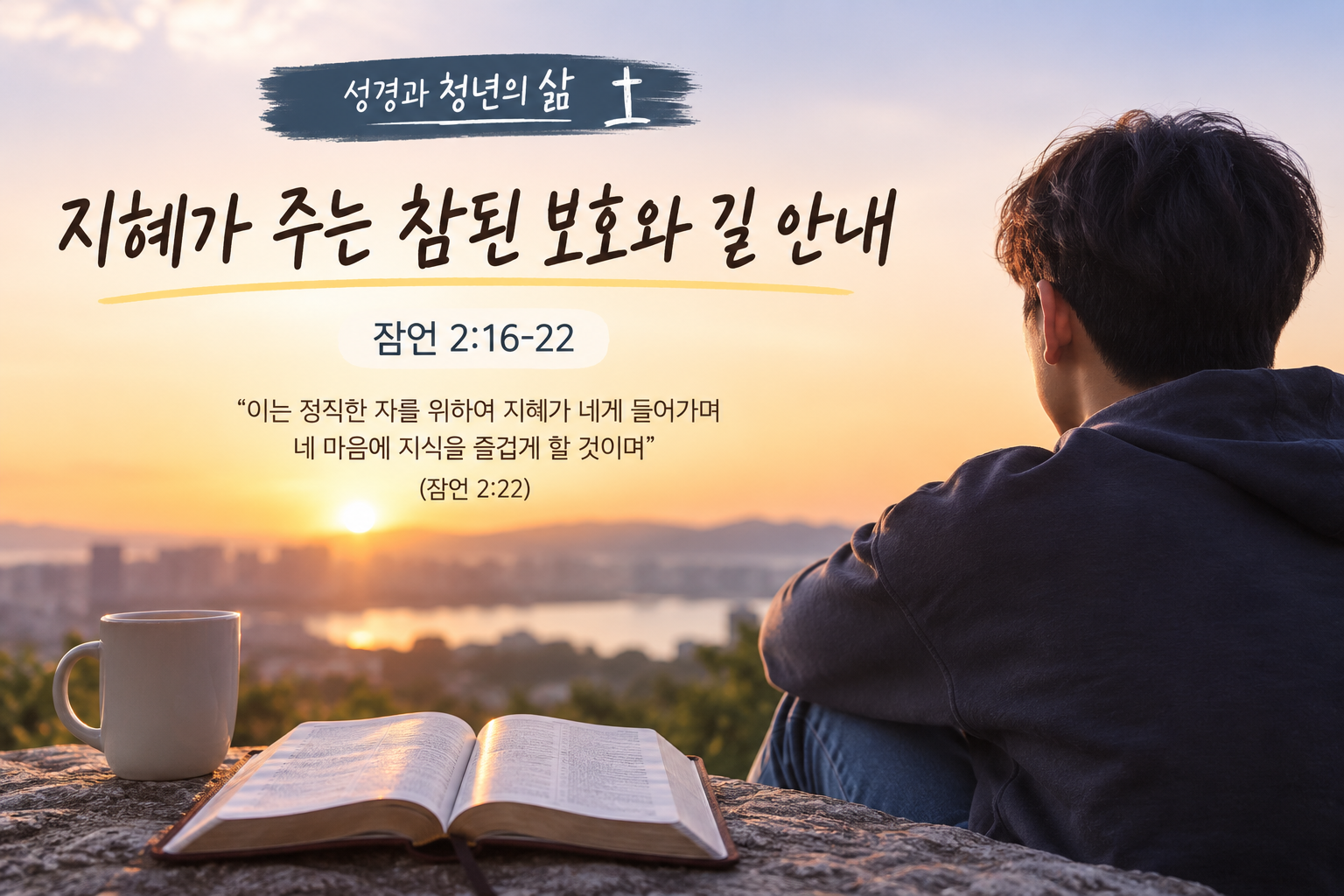
청년의 삶
지혜가 주는 참된 보호와 길 안내
본문: 잠언 2장 16-22절
들어가는 말
오늘의 청년들은 낯선 사람보다 매력적인 말에 더 쉽게 흔들리는 시대를 살아갑니다. 빠른 수익을 약속하는 투자 정보, 현실을 단숨에 바꿔 준다는 부업, 책임 없는 관계를 자유라고 포장하는 문화가 끊임없이 마음을 두드립니다. 유혹은 대개 “잘못된 길로 가라”고 솔직하게 말하지 않고, “이 정도는 괜찮다”거나 “너만 손해 보고 있다”고 속삭입니다(창 3:4-6).
잠언 2장 16–22절은 지혜가 우리에게 지식을 더해 주는 데서 끝나지 않고, 매끄러운 말과 위험한 관계에서 건져 내며 생명의 길을 선택하도록 보호한다고 가르칩니다(잠 2:16, 20). 지혜는 모든 유혹이 사라진 삶을 약속하지 않지만, 유혹의 정체를 알아보고 돌아설 힘을 줍니다(고전 10:13).
교훈의 핵심
16절의 “음녀”는 히브리어 자라(זָרָה)로, 문자적으로는 ‘낯선 여자’ 또는 ‘하나님의 질서에서 벗어난 사람’을 뜻합니다. 이어지는 “이방 여인”은 노크리야(נָכְרִיָּה)로, 언약 공동체의 가치와 다른 길로 이끄는 존재를 가리킵니다. 이것은 여성이나 외국인을 정죄하는 표현이 아니라, 잠언의 지혜 문학 안에서 하나님과의 약속을 버리게 만드는 유혹을 인격화한 표현입니다(잠 2:16-17).
본문은 그 유혹의 도구를 “호리는 말”이라고 설명합니다(잠 2:16). 여기서 “호리다”는 히브리어 할라크(חָלַק)에서 나온 말로, 말을 매끄럽게 하여 경계심을 풀고 판단을 흐리게 한다는 뜻입니다. 거짓말은 언제나 거칠게 다가오지 않고, 듣고 싶은 말과 인정받고 싶은 욕구를 이용해 마음속으로 들어옵니다(딤후 4:3-4). 그러므로 좋은 말처럼 들린다는 이유만으로 진실이라고 믿어서는 안 되며, 그 말이 하나님의 말씀과 어떤 열매를 맺는지 살펴야 합니다(마 7:16).
17절은 유혹하는 사람이 “젊은 시절의 짝을 버리며 그의 하나님의 언약을 잊는다”고 말합니다(잠 2:17). “언약”은 히브리어 베리트(בְּרִית)로, 하나님 앞에서 세운 책임 있는 관계와 약속을 뜻합니다. 죄의 시작에는 대개 ‘잊음’이 있습니다. 하나님이 나를 누구로 부르셨는지, 내가 어떤 약속 안에서 살아가는 사람인지 잊을 때 순간의 감정이 인생의 주인이 됩니다(신 8:11).
18절의 “길”은 히브리어 데레크(דֶּרֶךְ)로, 한 번의 행동이 아니라 반복되는 삶의 방향을 의미합니다. 본문은 그 집이 죽음으로 기울고 그 길이 사망한 자들에게 향한다고 경고합니다(잠 2:18). 죄의 길은 처음에는 짜릿함과 해방감을 주는 것처럼 보이지만, 반복될수록 관계와 양심과 미래를 무너뜨립니다(약 1:14-15). 잘못된 선택은 한순간일 수 있지만, 그것을 합리화하며 반복하면 결국 돌아오기 어려운 습관이 됩니다(잠 2:19).
그러나 본문은 두려움으로 끝나지 않습니다. 지혜는 우리로 하여금 선한 사람의 길을 걷고 의인의 길을 지키게 합니다(잠 2:20). 선한 길은 화려한 지름길이 아니라 하나님 앞에서 정직과 책임과 절제를 선택하는 길입니다(미 6:8). 세상은 즉각적인 만족을 약속하지만, 하나님은 정직한 사람이 땅에 거하며 온전한 사람이 남게 될 것이라고 말씀하십니다(잠 2:21).
적용
첫 번째로, 오늘 어떤 제안이나 관계가 지나치게 달콤하게 느껴진다면 즉시 결정하지 말고 하루를 기다리십시오. 감정이 가라앉은 뒤 “이 선택은 하나님과 사람 앞에서 공개해도 부끄럽지 않은가?”라고 질문하십시오(엡 5:10-13).
두 번째로, 오늘 자주 보는 콘텐츠와 가까이하는 관계 하나를 점검하십시오. 그것이 책임과 정직을 가르치는지, 욕망과 비교와 충동을 키우는지 분별하십시오(잠 13:20). 나를 하나님에게서 멀어지게 만드는 관계라면 미움 없이 거리를 두는 것도 지혜입니다(고전 15:33).
세 번째로, 아침에 잠언 2장 20절을 읽고 “오늘 선한 길에서 벗어나지 않겠습니다”라고 기도하십시오(잠 2:20). 지혜로운 삶은 거대한 결단보다 작은 약속을 지키고, 정직하게 말하며, 위험한 유혹 앞에서 한 걸음 물러서는 선택으로 만들어집니다(눅 16:10). 오늘 지혜를 따라 걷는 한 걸음이 내일의 생명의 길을 지켜 줄 것입니다(잠 4:18).
The Life of Young Adults
The True Protection and Guidance That Wisdom Gives
Scripture: Proverbs 2:16-22
Introduction
Young adults today live in an age where attractive words can be more dangerous than unfamiliar people. Investment tips that promise quick profits, side jobs that claim to change life overnight, and a culture that describes irresponsible relationships as freedom constantly knock on the heart. Temptation rarely says, “Walk down the wrong path.” Instead, it whispers, “This is not so bad,” or “You are the only one missing out” (Gen. 3:4-6).
Proverbs 2:16-22 teaches that wisdom does more than increase our knowledge. It rescues us from flattering words and dangerous relationships and protects us so that we may choose the path of life (Prov. 2:16, 20). Wisdom does not promise a life without temptation, but it gives us the ability to recognize temptation and turn away from it (1 Cor. 10:13).
The Core Teaching
The expression translated as “immoral woman” in verse 16 comes from the Hebrew word zarah (זָרָה), which literally refers to someone strange or outside God’s established order. The following expression, nokhriyyah (נָכְרִיָּה), describes someone who leads others away from the values of God’s covenant community. This does not condemn women or foreigners. In the wisdom literature of Proverbs, it personifies every temptation that draws a person away from faithfulness to God (Prov. 2:16-17).
The passage describes the instrument of temptation as “flattering words” (Prov. 2:16). The Hebrew root chalaq (חָלַק) means to make something smooth, lowering a person’s guard and clouding judgment. Lies do not always sound harsh. They often enter through the words we want to hear and through our desire to be approved (2 Tim. 4:3-4). Therefore, we must not believe something simply because it sounds pleasant. We must examine whether it agrees with God’s Word and what kind of fruit it produces (Matt. 7:16).
Verse 17 says that the unfaithful person abandons the companion of youth and forgets the covenant of God (Prov. 2:17). The Hebrew word for “covenant” is berit (בְּרִית), referring to a responsible promise established before God. Sin often begins with forgetting. When we forget who God has called us to be and what promises shape our lives, temporary feelings begin to rule us (Deut. 8:11).
The word “path” in verse 18 is the Hebrew word derek (דֶּרֶךְ), meaning not merely one action but a repeated direction of life. The passage warns that her house leads down to death and her paths to the departed (Prov. 2:18). The way of sin may first appear exciting and liberating, but repeated choices eventually damage relationships, conscience, and the future (James 1:14-15). A wrong choice may happen in a moment, but when it is justified and repeated, it becomes a habit that is difficult to leave (Prov. 2:19).
Yet the passage does not end with fear. Wisdom leads us to walk in the way of good people and keep to the paths of the righteous (Prov. 2:20). The good path is not a glamorous shortcut. It is the path of honesty, responsibility, and self-control before God (Mic. 6:8). The world promises immediate satisfaction, but God promises that the upright will dwell securely and the blameless will remain (Prov. 2:21).
Application
When an opportunity or relationship feels unusually attractive today, do not make an immediate decision. Wait for one day. After your emotions settle, ask, “Would I be ashamed if this decision became known before God and others?” (Eph. 5:10-13).
Second, examine one form of content you frequently consume and one relationship that strongly influences you. Ask whether it strengthens honesty and responsibility or increases comparison, desire, and impulsiveness (Prov. 13:20). When a relationship continually draws you away from God, creating distance without hatred can also be an act of wisdom (1 Cor. 15:33).
Third, read Proverbs 2:20 in the morning and pray, “Help me not to leave the good path today” (Prov. 2:20). A wise life is formed through small choices: keeping promises, speaking honestly, and stepping back from dangerous temptation (Luke 16:10). One step taken in wisdom today will help protect the path of life tomorrow (Prov. 4:18).
'청년' 카테고리의 다른 글
| [청년의 삶] 지혜의 징계를 받으라 (0) | 2026.07.27 |
|---|---|
| [청년의 삶] 마음을 다하여 하나님을 신뢰하라 (0) | 2026.07.26 |
| [청년의 삶] 길을 분별하고 의의 길을 걸으라(잠 2:9-15) (0) | 2026.07.24 |
| [청년의 삶] 지혜는 찾는 사람에게 열린다(잠 2:1-8) (1) | 2026.07.23 |
| [청년의 삶] 달콤한 제안 뒤에 숨은 함정 (0) | 2026.07.22 |


