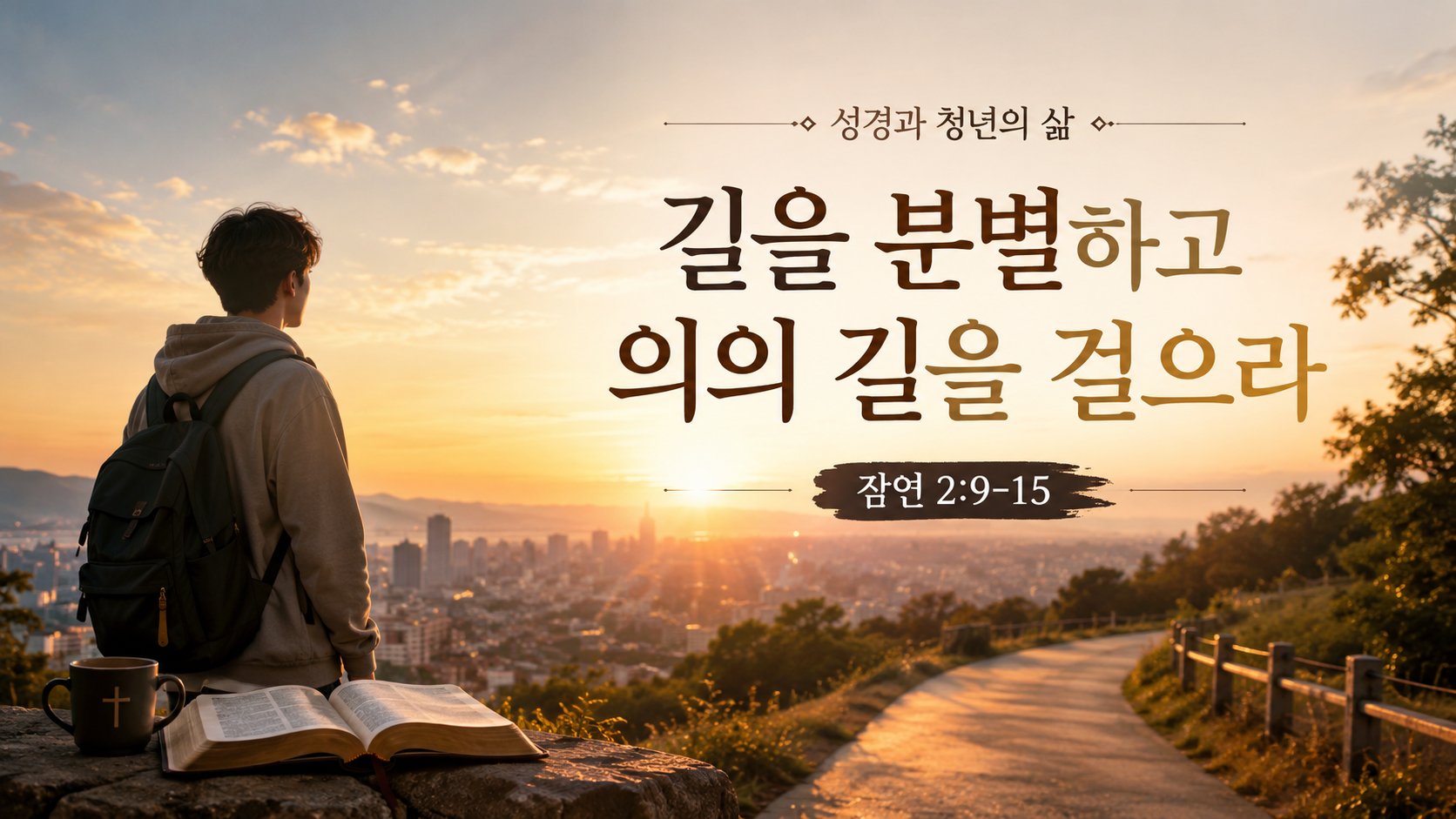
성경과 청년의 삶
길을 분별하고 의의 길을 걸으라
본문: 잠언 2장 9-15절
들어가는 말
청년의 하루는 수많은 선택으로 이루어집니다. 어떤 일을 받아들일지, 누구와 가까이할지, 돈과 시간을 어디에 쓸지 결정해야 합니다. 문제는 옳은 길이 언제나 유리해 보이지 않는다는 것입니다. 정직하게 일한 사람보다 편법을 사용한 사람이 더 빨리 인정받고, 원칙을 지키는 사람보다 분위기에 적응하는 사람이 더 영리해 보일 때가 있습니다. 그래서 청년들은 “바르게 사는 것이 정말 현실적인가?”라는 질문 앞에서 흔들립니다.
잠언 2장 9-15절은 지혜를 얻은 사람이 단지 많은 지식을 소유하는 데서 멈추지 않고, 공의와 정의와 정직의 길을 분별하게 된다고 말합니다(잠 2:9). 하나님의 지혜는 성공하는 방법만 알려 주는 기술이 아니라, 성공보다 더 중요한 삶의 방향을 판단하게 하는 능력입니다(잠 2:10-11).
교훈의 핵심
9절의 “공의”는 히브리어 체데크(צֶדֶק)로, 하나님의 바른 기준에 맞는 상태를 뜻합니다. “정의”는 미쉬파트(מִשְׁפָּט)로, 감정이나 이해관계가 아니라 공정한 판단과 질서를 의미합니다. “정직”은 메샤림(מֵישָׁרִים)으로, 굽지 않고 곧은 길을 가리킵니다. 지혜를 얻는다는 것은 상황에 따라 기준을 바꾸는 처세술을 배우는 것이 아니라, 하나님 앞에서 무엇이 바르고 공정하며 곧은지를 깨닫는 것입니다(잠 2:9).
본문은 지혜가 머리에만 머물지 않고 마음에 들어가야 한다고 말합니다(잠 2:10). 성경을 많이 알아도 욕심과 두려움이 선택을 지배한다면 그 지식은 아직 삶의 지혜가 되지 못한 것입니다. 말씀은 외워 두는 문장에서 끝나지 않고, 손해를 감수하더라도 옳은 선택을 하게 만드는 내면의 기준이 되어야 합니다(시 119:11).
11절의 “근신”은 히브리어 메짐마(מְזִמָּה)로, 앞을 생각하고 계획하며 결과를 살피는 신중함을 뜻합니다. “명철”은 테부나(תְּבוּנָה)로, 겉모습 뒤에 있는 본질을 구별하는 통찰입니다. 지혜로운 사람은 “지금 재미있는가?”만 묻지 않고 “이 선택이 나를 어디로 데려갈 것인가?”를 묻습니다(잠 14:8). 근신은 자유를 빼앗는 장벽이 아니라, 충동과 후회로부터 삶을 지키는 울타리입니다(잠 2:11).
12절은 지혜가 악한 길과 패역한 말을 하는 사람에게서 우리를 건진다고 말합니다(잠 2:12). “패역”에 해당하는 히브리어 타흐푸코트(תַּהְפֻּכוֹת)는 바른 것을 뒤집고 왜곡하는 말을 뜻합니다. 오늘날에는 거짓을 사실처럼 포장하는 콘텐츠, 타인을 조롱해야 관심을 얻는 문화, 수단보다 결과를 중시하는 성공담이 청년의 판단을 흐리게 합니다. 계속 듣는 말은 결국 생각이 되고, 반복된 생각은 삶의 길이 됩니다(잠 4:23).
악한 길의 사람들은 바른길을 떠나 어두운 길로 가며, 악을 즐거워하고 굽은 행동을 기뻐합니다(잠 2:13-15). 죄가 가장 위험한 순간은 실수했을 때가 아니라, 잘못을 즐거워하고 자랑하기 시작할 때입니다. 세상이 박수를 보내더라도 하나님께서 미워하시는 길이라면 멈출 수 있어야 합니다(사 5:20).
적용
오늘 중요한 선택을 하기 전 세 가지를 점검해 보십시오. 첫째, “이 일은 하나님 앞에서 정직한가?”라고 질문하십시오(잠 11:3). 둘째, “이 선택으로 누군가가 부당한 손해를 입지는 않는가?”를 살펴보십시오(빌 2:4). 셋째, “이 길을 계속 걸었을 때 나는 어떤 사람이 될 것인가?”를 생각하십시오(갈 6:7).
작은 일에서도 의의 길을 선택하십시오. 약속을 지키고, 실수를 숨기지 말며, 온라인에서도 사실을 왜곡하지 마십시오(눅 16:10). 또한 오늘 내가 반복해서 듣는 콘텐츠와 가까이하는 관계를 점검하십시오. 악한 말과 조롱을 즐기는 환경에서 거리를 두고, 선한 영향력을 주는 사람과 말씀 가까이에 머무르십시오(고전 15:33).
지혜로운 삶은 모든 미래를 아는 삶이 아닙니다. 오늘 하나님께서 기뻐하시는 한 걸음을 분별하고, 손해가 있어도 그 길을 선택하는 삶입니다(미 6:8). 의의 길은 때로 느리고 외로워 보이지만, 하나님께서는 정직하게 행하는 사람의 길을 지키십니다(잠 2:7-8).
The Bible and the Life of Young Adults
Discern the Path and Walk in the Way of Righteousness
Scripture: Proverbs 2:9-15
Introduction
A young adult’s day is made up of countless decisions. We must decide which opportunities to accept, whom to trust, and where to invest our time and money. The problem is that the right path does not always appear advantageous. Sometimes people who use shortcuts are recognized faster than those who work honestly, and people who compromise their principles appear wiser than those who remain faithful. This causes many young adults to ask, “Is living rightly truly realistic?”
Proverbs 2:9-15 teaches that a person who receives wisdom does not simply gain information. That person learns to discern righteousness, justice, and integrity (Prov. 2:9). God’s wisdom is not merely a technique for achieving success. It is the ability to recognize a direction in life that is more important than success itself (Prov. 2:10-11).
The Core Teaching
The word translated as “righteousness” in verse 9 is the Hebrew word tsedeq (צֶדֶק), which describes what conforms to God’s right standard. “Justice” is mishpat (מִשְׁפָּט), referring to fair judgment and proper order rather than decisions controlled by emotion or personal interest. “Integrity” is related to mesharim (מֵישָׁרִים), meaning straightness or an upright path. Receiving wisdom is not learning how to change our standards according to circumstances. It is learning what is right, fair, and upright before God (Prov. 2:9).
The passage says that wisdom must enter the heart rather than remain only in the mind (Prov. 2:10). Even if we know many Bible verses, that knowledge has not yet become wisdom when fear and greed still control our decisions. God’s Word must become an inner standard that leads us to choose what is right, even when obedience may cost us something (Ps. 119:11).
The Hebrew word translated as “discretion” in verse 11 is mezimmah (מְזִמָּה). It means thoughtful planning, careful consideration, and the ability to examine consequences. “Understanding” is tevunah (תְּבוּנָה), the insight that distinguishes reality from outward appearance. A wise person does not ask only, “Is this enjoyable right now?” but also, “Where will this choice eventually lead me?” (Prov. 14:8). Discretion is not a barrier that takes away freedom. It is a protective boundary that guards us from impulsive decisions and regret (Prov. 2:11).
Verse 12 says that wisdom delivers us from evil ways and from people who speak perversely (Prov. 2:12). The Hebrew word tahpukot (תַּהְפֻּכוֹת), translated as “perverse,” describes words that overturn and distort what is right. Today, young adults are surrounded by content that presents lies as truth, gains attention through mockery, and values results more than integrity. The words we repeatedly hear shape our thoughts, and repeated thoughts eventually shape the direction of our lives (Prov. 4:23).
Those who follow the evil way leave upright paths, walk in darkness, and delight in wrongdoing (Prov. 2:13-15). Sin becomes most dangerous not merely when a person fails, but when that person begins to enjoy and celebrate what is wrong. Even when the world applauds, we must be willing to stop when a path is displeasing to God (Isa. 5:20).
Application
Before making an important decision today, ask three questions. First, “Is this honest before God?” (Prov. 11:3). Second, “Will someone suffer unfairly because of this decision?” (Phil. 2:4). Third, “What kind of person will I become if I continue walking this path?” (Gal. 6:7).
Choose the righteous path even in small matters. Keep your promises, do not hide mistakes, and do not distort facts online (Luke 16:10). Examine the content you repeatedly consume and the relationships that influence you. Distance yourself from environments that enjoy deception and ridicule, and remain close to God’s Word and to people who encourage goodness (1 Cor. 15:33).
A wise life is not a life that knows every detail of the future. It is a life that discerns the one step that pleases God today and chooses that step even when it involves sacrifice (Mic. 6:8). The righteous way may sometimes appear slow and lonely, but God guards the path of those who walk with integrity (Prov. 2:7-8).
'청년' 카테고리의 다른 글
| [청년의 삶] 마음을 다하여 하나님을 신뢰하라 (0) | 2026.07.26 |
|---|---|
| [청년의 삶] 지혜가 주는 참된 보호와 길 안내 (0) | 2026.07.25 |
| [청년의 삶] 지혜는 찾는 사람에게 열린다(잠 2:1-8) (1) | 2026.07.23 |
| [청년의 삶] 달콤한 제안 뒤에 숨은 함정 (0) | 2026.07.22 |
| [청년의 삶] 삶의 무게 중심을 어디에 두는가? (0) | 2026.07.21 |


